The United States and Sudan quietly held talks in Switzerland on Monday, August 11, a year after Sudan’s military government boycotted a U.S.-mediated peace summit in Switzerland. The talks are the highest-level contacts between the two governments since the change of administrations in the U.S.
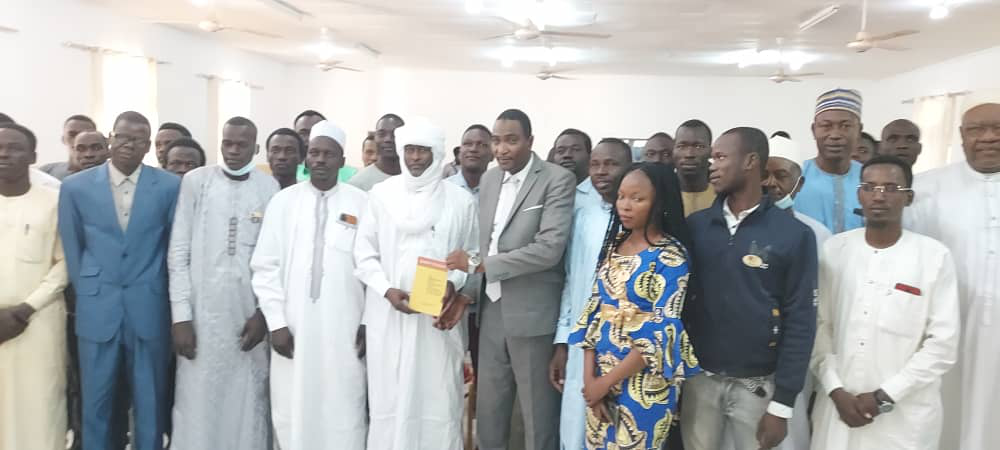
The talks took place between Massad Boulos, the Senior Advisor for Africa at the U.S. Department of State, and President Abdel Fattah al-Burhan, Sudan’s military ruler, and their respective delegations. The discussions lasted about three hours. Boulos, a Lebanese-American, is the father-in-law of Donald Trump’s daughter Tiffany.
Neither U.S. news media nor official Sudanese state media reported on this “secret” meeting between Boulos and Burhan. However, independent Sudanese news sources revealed the talks, as did AFP, which cited two Sudanese government sources saying that the two sides met “to discuss a US peace plan.”
Sudanese news media indicated a narrower agenda, focusing on humanitarian access and a ceasefire — not a full peace plan. Sudan’s government has consistently refused to negotiate with the Rapid Support Forces (RSF), the Arab paramilitary that mutinied in 2023, triggering the current civil war.
Flight tracking websites indicate that a Qatari jet traveled from Port Sudan on Monday evening, landed in Zurich and returned the next day to Port Sudan, before returning to Qatar. This coincides with Burhan’s visit to Switzerland and corroborates reports that Qatar helped arrange the meeting between the two governments.
The day after the talks, Boulos issued a brief statement on X, formerly Twitter. Though he said nothing directly about his talks with Al-Burhan, he condemned a recent attack by the RSF, which is battling Al-Burhan’s forces in western Sudan.
“The United States condemns the killings of civilians, allegedly by the Rapid Support Forces (RSF) in Abu Shok camp in El Fasher, North Darfur,” Boulos wrote. “We remain deeply alarmed by the deteriorating situation and reports of RSF violence against civilians in and around El Fasher. We call for unhindered humanitarian access and the protection of civilians, including safe passage for those fleeing violence.”
U.S. diplomatic attention to the Sudan conflict has dropped significantly since the former special envoy, Tom Perriello, left office in January and was not replaced. Perriello’s refusal to take sides in the conflict—or even to recognize one side or the other as “legitimate”—advocating instead for a mediated solution, angered the Sudanese military government and contributed to poor U.S.-Sudan relations last year.
Perriello was the last of the eight high-level “special envoys” appointed by the United States since 1999 to coordinate U.S. policy toward Sudan and conduct diplomacy with the various warring parties and neighboring countries.
The second of these envoys, former Senator John Danforth, appointed in 2001, played a role in brokering the peace deal that ended the Second Sudanese Civil War (1983-2005). This agreement granted autonomy to South Sudan and led to its eventual independence through a referendum held in 2011.
Subsequent U.S. envoys, however, struggled to achieve success in peace talks relating to Sudan’s western Darfur region, where a separate civil war raged from 2003-2019. Qatar and the African Union also played leading roles in brokering talks during this conflict, but have taken a less active role since fighting resumed in Darfur in 2023, shortly after the departure of UN peacekeeping troops.
It seems unlikely that the current U.S. administration, which has downsized and restructured the State Department and National Security Council, will appoint another special envoy for Sudan, thus ending the long-standing U.S. diplomatic tradition. Instead, Boulos, whose remit includes all of Africa, is handling the Sudan file.
Boulos recently visited Guinea, Gabon, Rwanda, Algeria, Libya, and Qatar.
The Trump Administration has slashed humanitarian aid and eliminated hundreds of positions at the U.S. Agency for International Development (USAID), which had played a key role in famine relief operations in Sudan.
Both sides in Sudan’s civil war seized power in a coup in 2021, toppling the civilian government, before turning on each other in 2023.
The United States government, as well as Saudi Arabia, Türkiye, and the East African bloc IGAD, have offered to mediate talks between the two sides. Despite these mediation offers, no peace talks have taken place since the start of the conflict in April 2023, apart from abortive ceasefire talks during the first few months of the war, which resulted in a handful of brief, shaky ceasefires.
Sudan War Monitor
