

tdg.ch
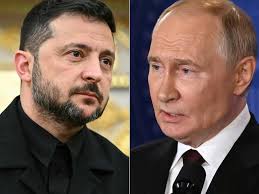
Volodymyr Zelensky, president of a nation devastated by war, embodies a legitimate moral resistance. His harsh rhetoric toward Vladimir Putin reflects a deep national wound and a determination not to trivialize the aggression. Yet in the pursuit of peace, one must sometimes choose between principles and pragmatism.
The linguistic divide within the Ukrainian camp prompted Donald Trump to declare that bringing the two men together would be like “mixing oil and vinegar.” As for Vladimir Putin, he withdrew after initially agreeing to a meeting, stating that the timing was not right and that such a summit should be preceded by technical negotiations between experts. This stance illustrates the gap between a Ukraine seeking justice and a Russia entrenched in its geopolitical interests.
Negotiating with an enemy occupying 20% of one’s territory is a painful necessity—but an unavoidable one. History is full of examples where talks were initiated despite atrocities: Nelson Mandela with the apartheid regime, or the Dayton Accords for Bosnia. These precedents remind us that peace is often built with those considered adversaries.
For negotiations between Ukraine and Russia to succeed, several conditions must be met:
Hope, however, may come from President Recep Tayyip Erdoğan, who maintains good relations with both sides. He recently declared that Turkey is ready to host a summit. This proposal deserves serious consideration, as it could offer a neutral and symbolic setting to initiate trilateral dialogue.
AYD
Président du CEDPE
yacoubahmat@aol.com
The linguistic divide within the Ukrainian camp prompted Donald Trump to declare that bringing the two men together would be like “mixing oil and vinegar.” As for Vladimir Putin, he withdrew after initially agreeing to a meeting, stating that the timing was not right and that such a summit should be preceded by technical negotiations between experts. This stance illustrates the gap between a Ukraine seeking justice and a Russia entrenched in its geopolitical interests.
Negotiating with an enemy occupying 20% of one’s territory is a painful necessity—but an unavoidable one. History is full of examples where talks were initiated despite atrocities: Nelson Mandela with the apartheid regime, or the Dayton Accords for Bosnia. These precedents remind us that peace is often built with those considered adversaries.
For negotiations between Ukraine and Russia to succeed, several conditions must be met:
- A minimum level of trust, even if tactical.
- Credible mediators capable of creating a space for dialogue.
- A genuine political will on both sides.
Hope, however, may come from President Recep Tayyip Erdoğan, who maintains good relations with both sides. He recently declared that Turkey is ready to host a summit. This proposal deserves serious consideration, as it could offer a neutral and symbolic setting to initiate trilateral dialogue.
AYD
Président du CEDPE
yacoubahmat@aol.com
