
Today marks a painful anniversary for Sudan. On this day three years ago, fighting erupted in the capital Khartoum around the presidential palace, the airport, and key military sites. Two security organs of the regime — the Sudanese Armed Forces (SAF) and the Rapid Support Forces (RSF) — hurled their forces at each other in a desperate battle for supremacy.
Since then, the war has raged across vast swathes of the country, displacing a quarter of the population and plunging millions into poverty and hunger. Neither party in the conflict has come out on top, and each side seems determined to continue the fight, while rejecting all negotiations.
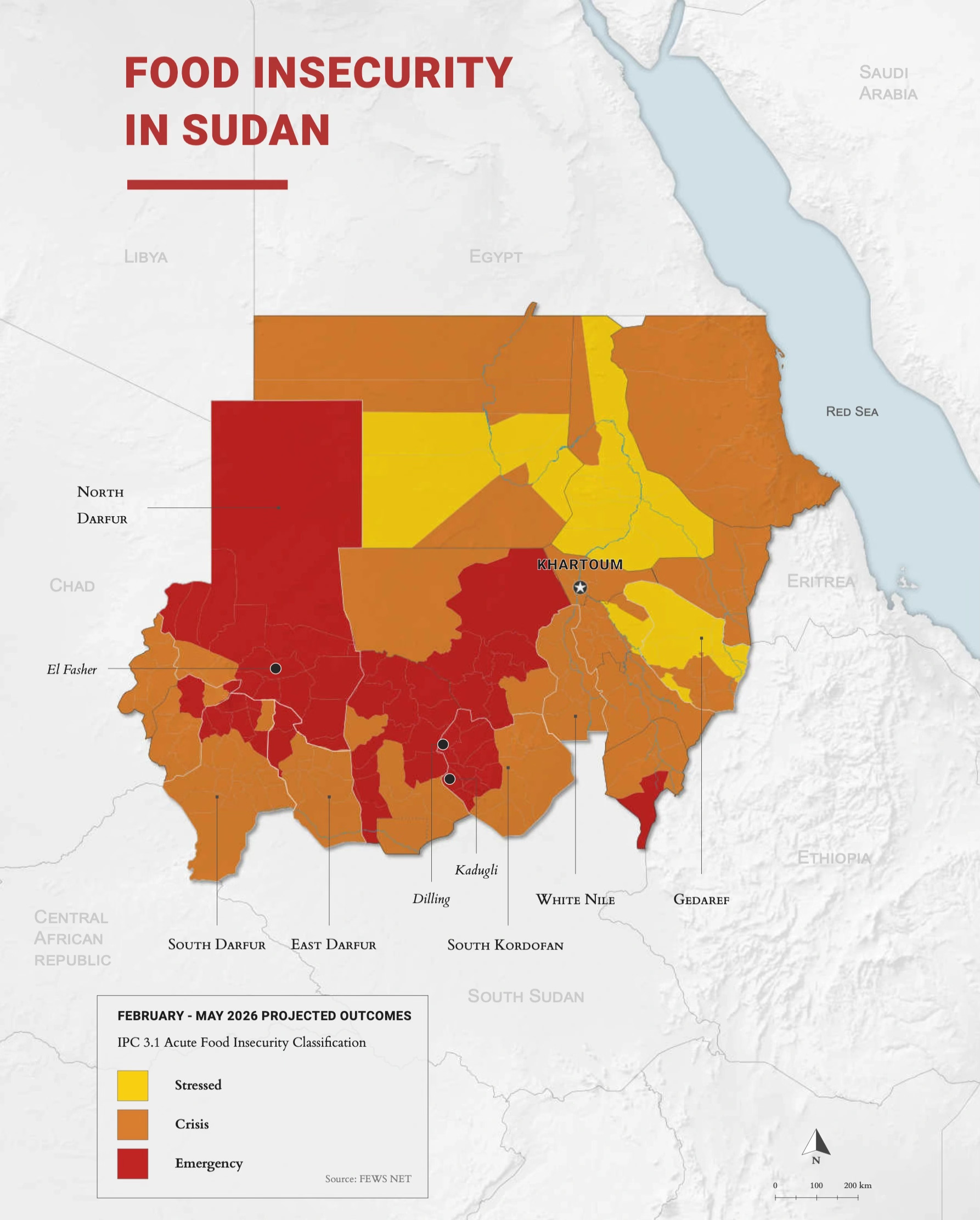
The stalemate poses severe economic risks for Sudan. In the near term, this includes a “credible risk of famine” in the Kordofan and Darfur regions later this year. In the long term, it means that Sudan will fall farther behind peer nations in Africa, pushing it into the ranks of the world’s poorest countries.
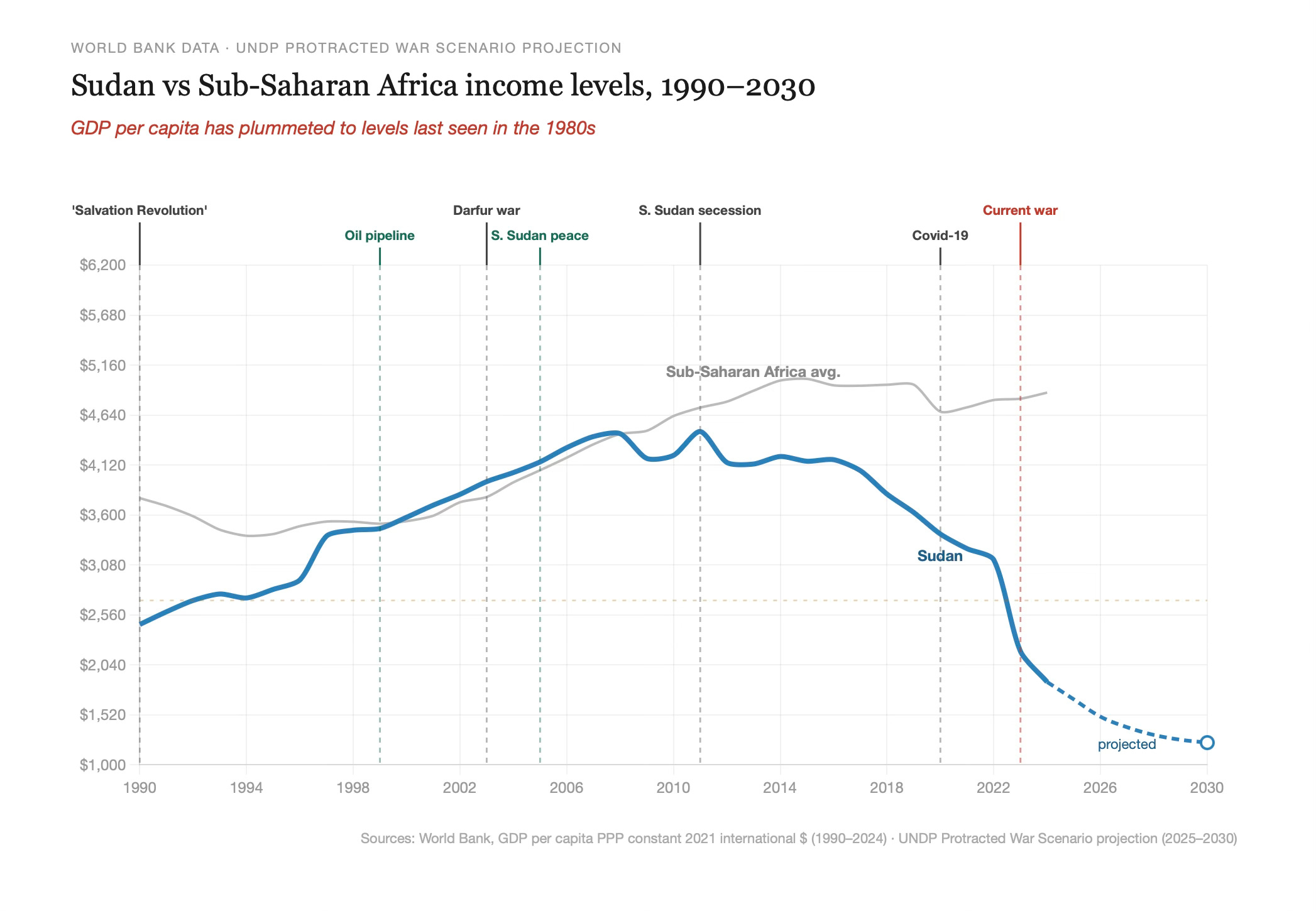
Millions of Sudanese are now living on only one meal a day. Per capita income has dropped to about US$1800 annually, equivalent to $5 per day. This level is lower than it was in 1989, the year that military rule began in Sudan with the coup d’état of General Omar Al-Bashir.
Thousands of Sudanese already died in localized famines in besieged cities and rural conflict hotspots in 2024-2025. But a larger, more dire famine of the kind that could kill a half million people or more, has not come to pass.
Combined efforts of local and international aid groups played a role in preventing the worst-case scenarios predicted earlier in the conflict. The UN World Food Programme says that it reached 12 million people with assistance in Sudan last year “and successfully pushed back famine in several locations,” by providing a mix of donated food and cash assistance.
Meanwhile, local responders — including “Emergency Response Rooms,” women-led organizations and local non-governmental organizations — have provided millions of meals through communal kitchens serving the most vulnerable. Known as Takaaya, these kitchens rely on contributions from host communities, diaspora networks, volunteers, and supporting INGOs.
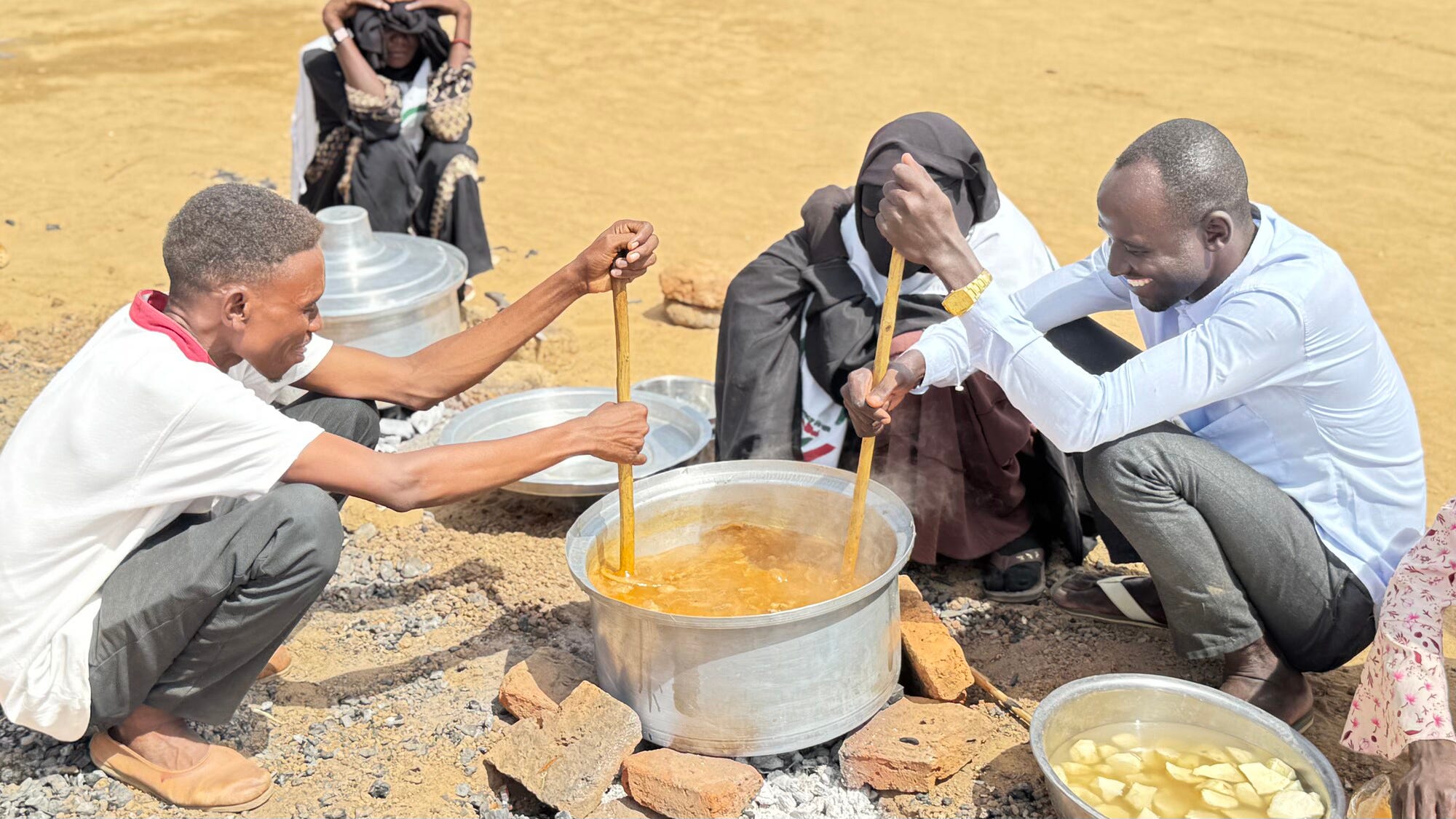
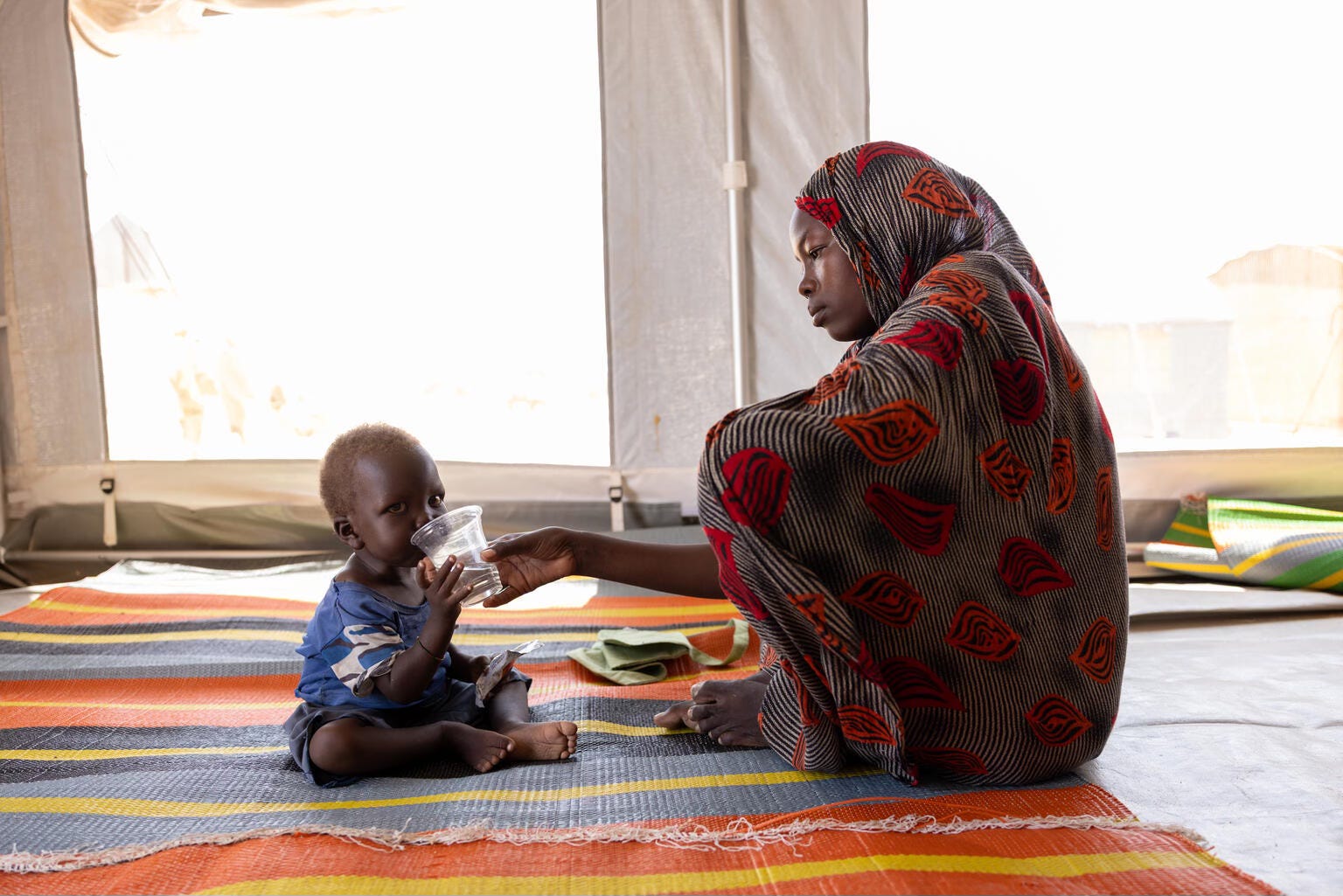
A report released yesterday by five major international aid organizations — Action Against Hunger, CARE, International Rescue Committee, Mercy Corps, and Norwegian Refugee Council — pays tribute to the “farmers’ associations, suppliers, transporters and traders, women’s savings groups, Emergency Response Rooms (ERRs), other mutual aid groups, and village committees” that have kept food moving in Sudan, often at great personal risk.
The report praises the “extraordinary ingenuity and solidarity” of Sudanese communities that have adapted to prevent widespread death and starvation.
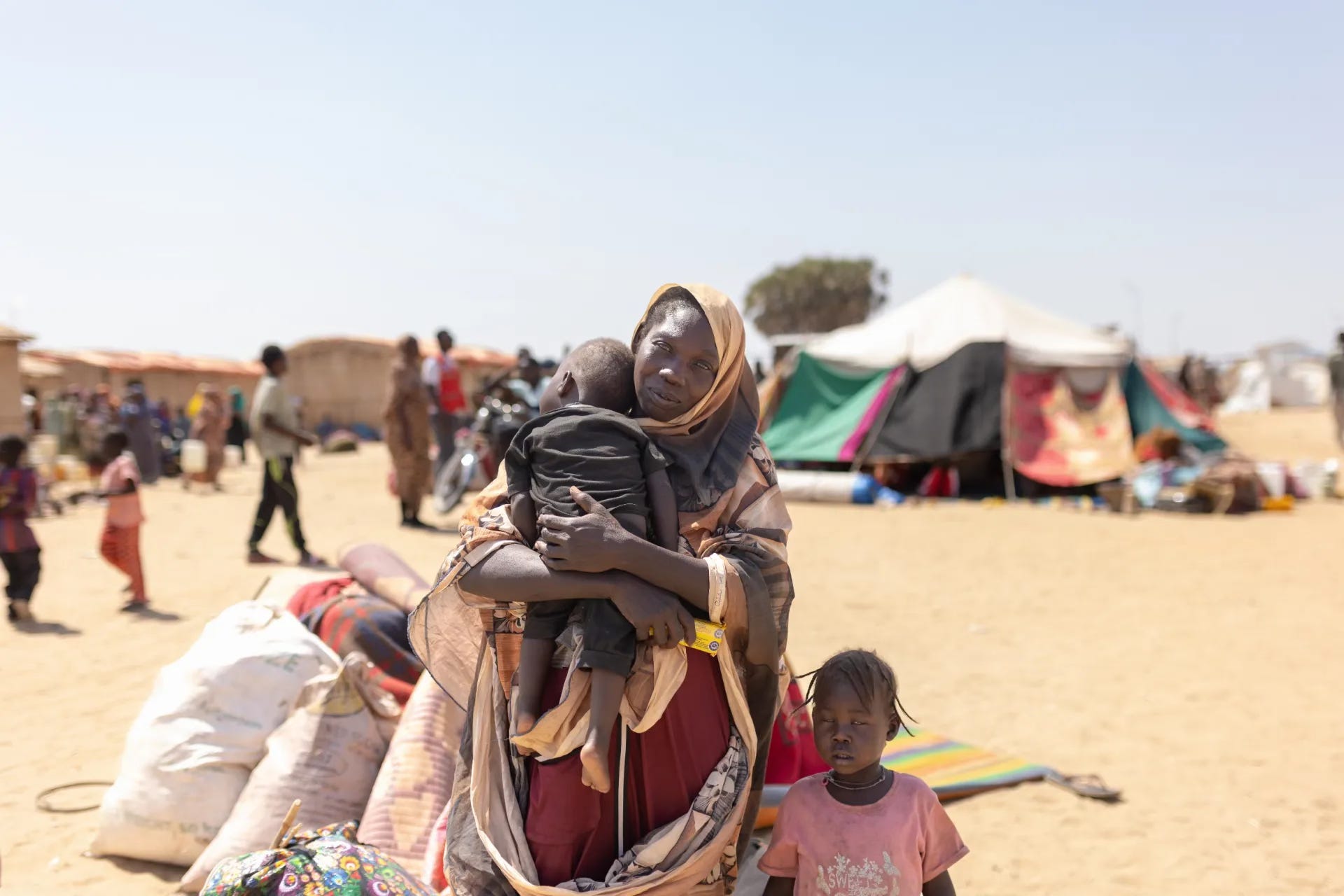
Despite these efforts, “Sudan’s food crisis is deepening and threatening to spread,” the report warned. “Nearly three years of conflict, marked by violence, displacement and siege tactics, have systematically eroded Sudan’s food system – field by field, road by road, market by market – producing mass hunger. The United Nations (UN) Independent International Fact-Finding Mission has documented a ‘war of atrocities’ against civilians, including the use of starvation and sexual violence as weapons of war, with direct and large-scale attacks on civilians and civilian infrastructures.”
The report pointed to several signs of growing distress, such as families skipping meals entirely, reducing portions, or in some cases resort to eating leaves and animal feed, food not normally considered edible. Communal kitchens, once a lifeline for many, are increasingly unable to meet rising needs as funding and food supplies dwindle. One community kitchen volunteer in South Kordofan said, “Before, we cooked every day. Now we cook when food comes, maybe once or twice a week.”
“Markets are fragile and vulnerable to violent attacks, closures, and predatory taxation. Essential supply routes remain regularly attacked by drones, threatening both traders and aid transportation.”
Aid organizations say they need more funds to continue operating and meet rising needs. In a press release April 9, the World Food Programme said, “Food stocks in the country are depleting and are expected to run out within weeks. WFP urgently requires more than US$600 million to sustain life-saving operations for the next six months.”
“WFP is ready to do more, but we urgently need the funding to do so,” said Carl Skau, WFP’s Deputy Executive Director. “We want to reach more people with lifesaving food assistance and ensure children and mothers struggling with malnutrition can access critical nutritional supplements.”
Meanwhile, in areas recovering from conflict, he said, “we feel we can help communities to rebuild their lives, get farmers back out into their fields, and enable children to return to school.”
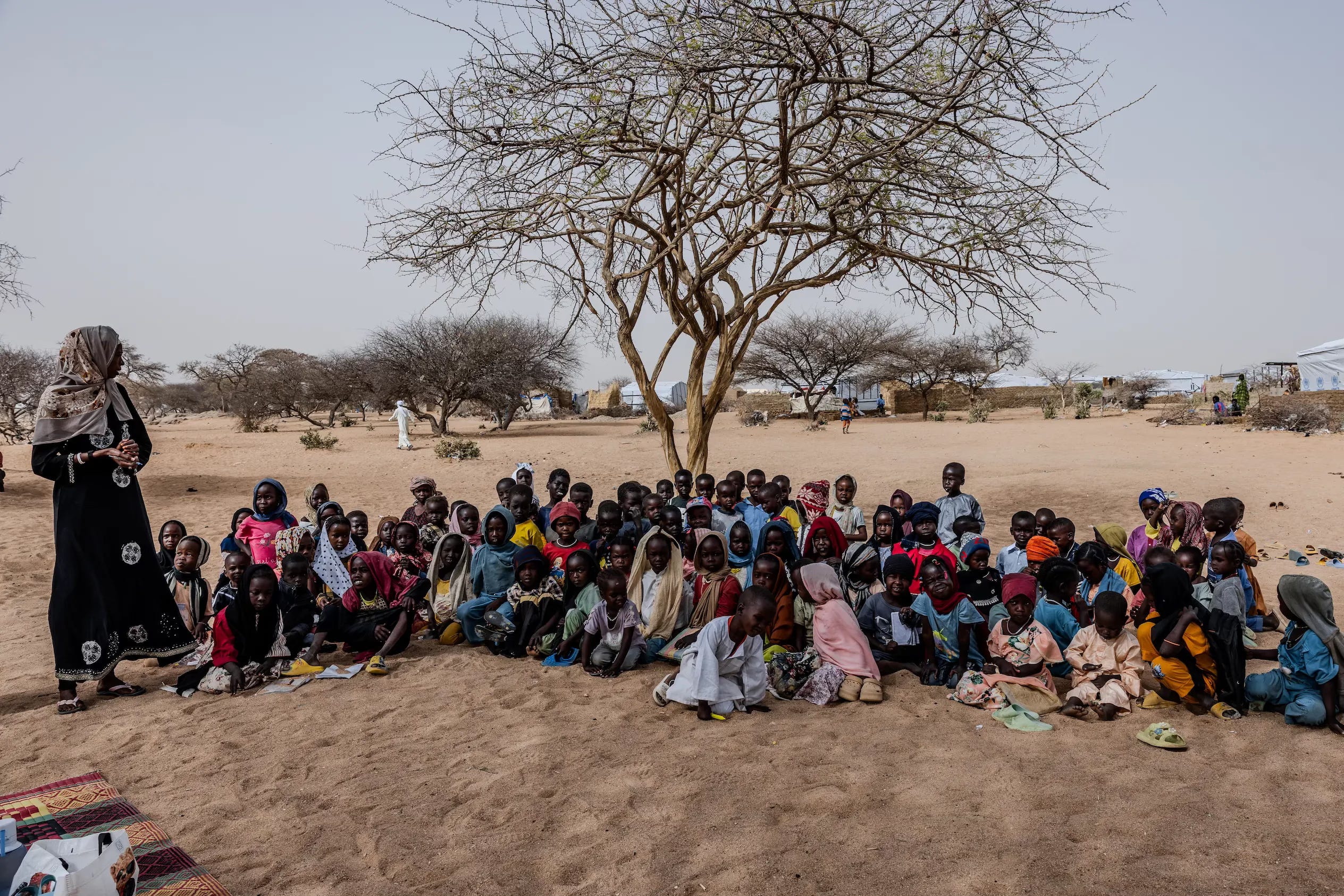
Similarly, the World Health Organization issued an appeal for more funding, writing in a press release from Geneva yesterday,
“Three years of war in Sudan have created the world’s largest humanitarian and displacement crisis, with devastating consequences for people’s health.
“While the situation is improving in some states, the health crisis is deepening in areas where fighting continues… Over 4 million people are estimated to be acutely malnourished in 2026 making them vulnerable to medical complications and disease. Disease outbreaks are widespread, with malaria, dengue, measles, polio (cVDPV2), hepatitis E, meningitis, and diphtheria reported from several states.”
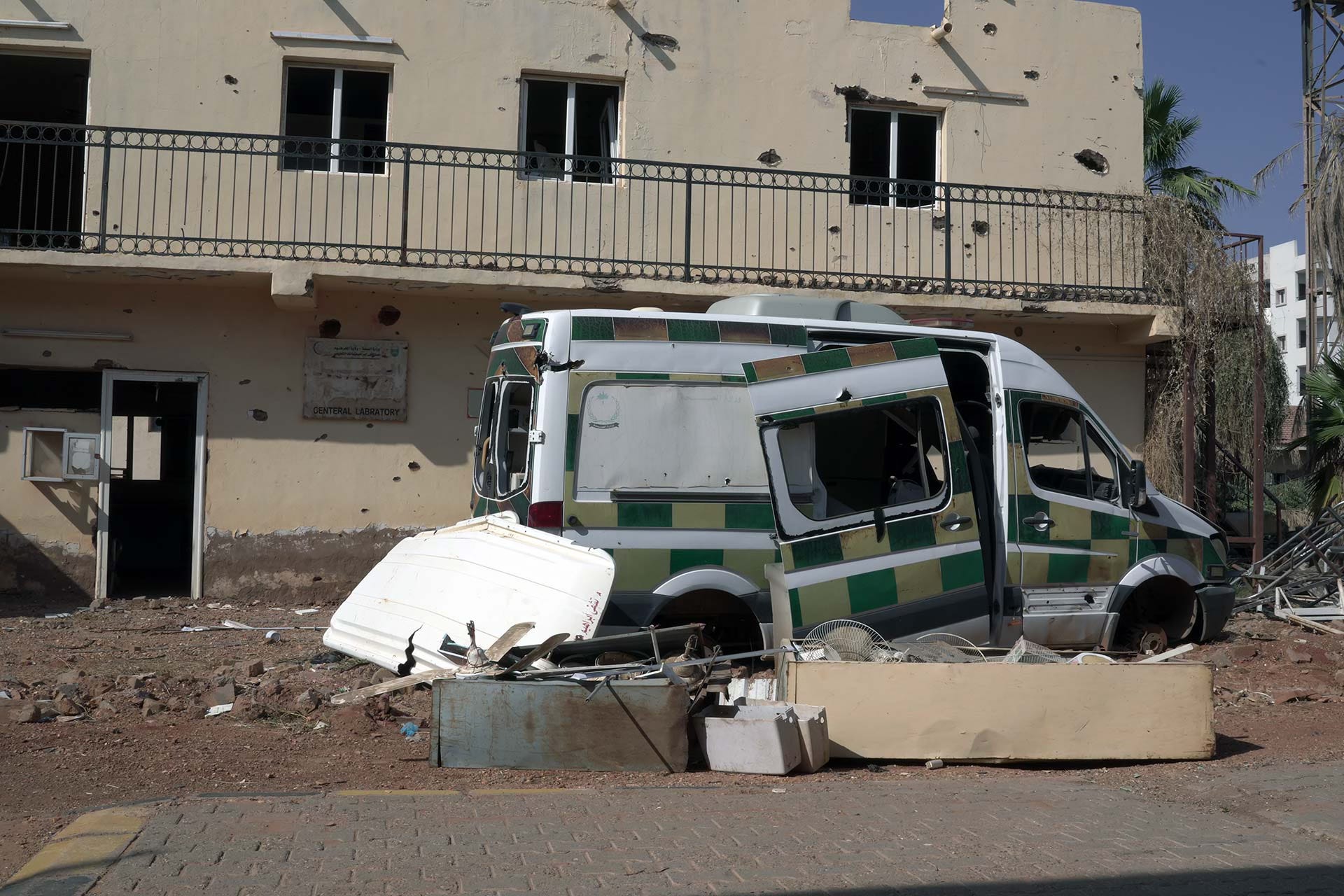
More than a third of Sudan’s health facilities are non-functional, and hospitals, ambulances, patients and health workers have been repeatedly attacked, further reducing access to health care.
Aid organizations are unable to reach some of the most vulnerable populations in Sudan (such as Dilling, Kadugli, and rural villages and displacement camps in parts of Darfur and Kordofan where fighting persists), and they do not have the resources to meet the needs of displaced people even in the more accessible areas, such as White Nile and Northern State.
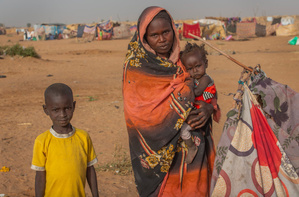
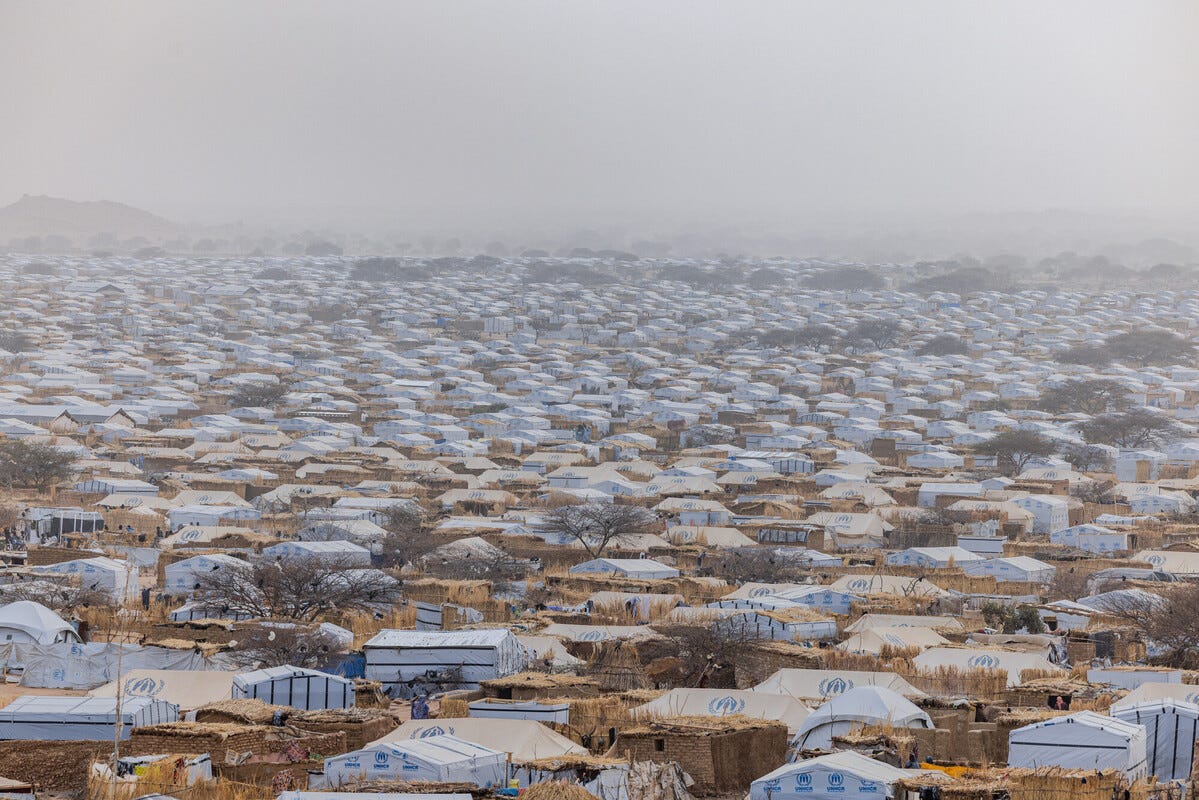
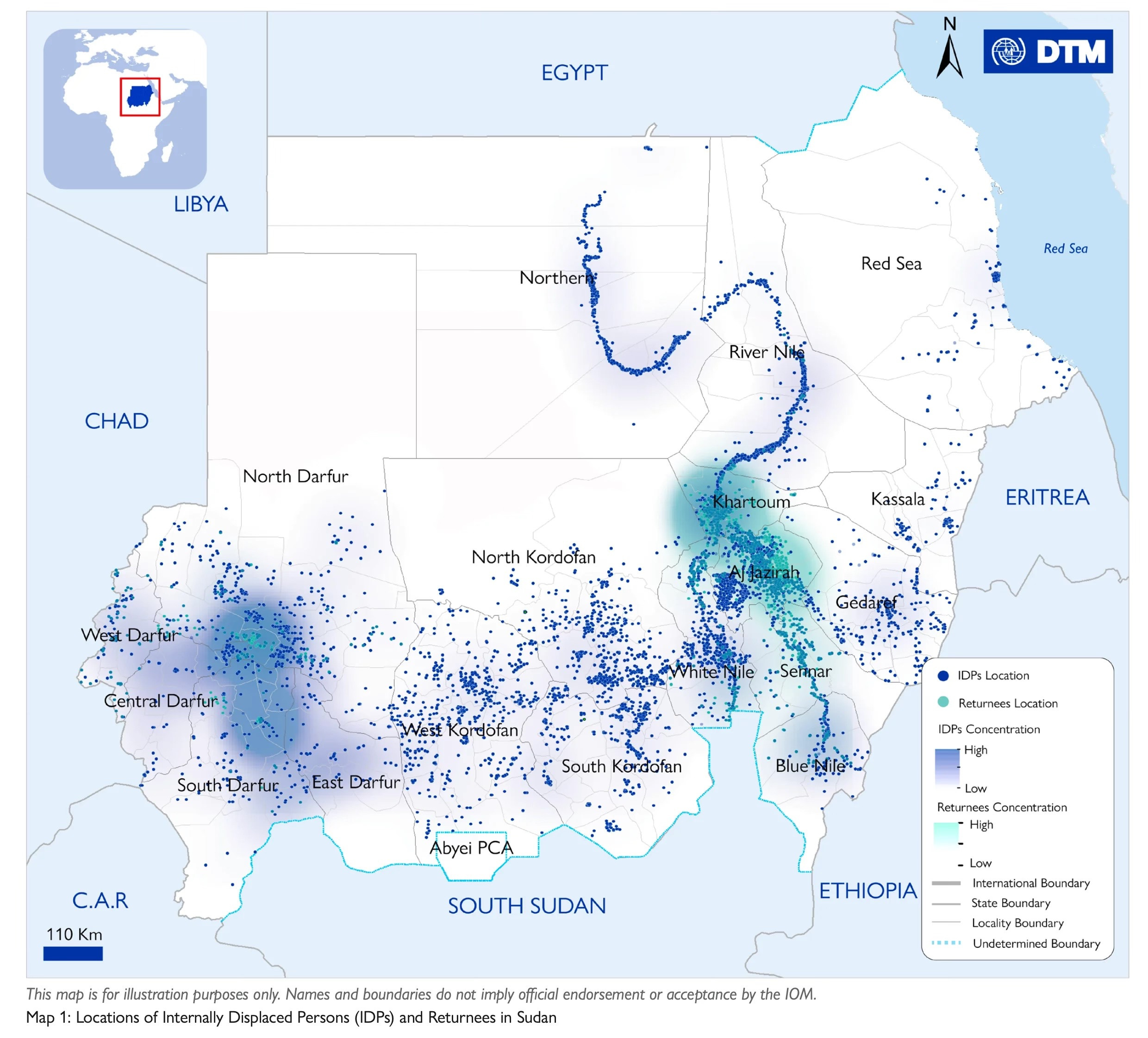
More than three million people have returned to their homes in Khartoum and other central parts of Sudan after fighting there ended last year. But approximately 14 million people still remain displaced (9 million inside Sudan and 4.4 million internationally). Many of these live in a state of destitution and dependency in sprawling tent cities.
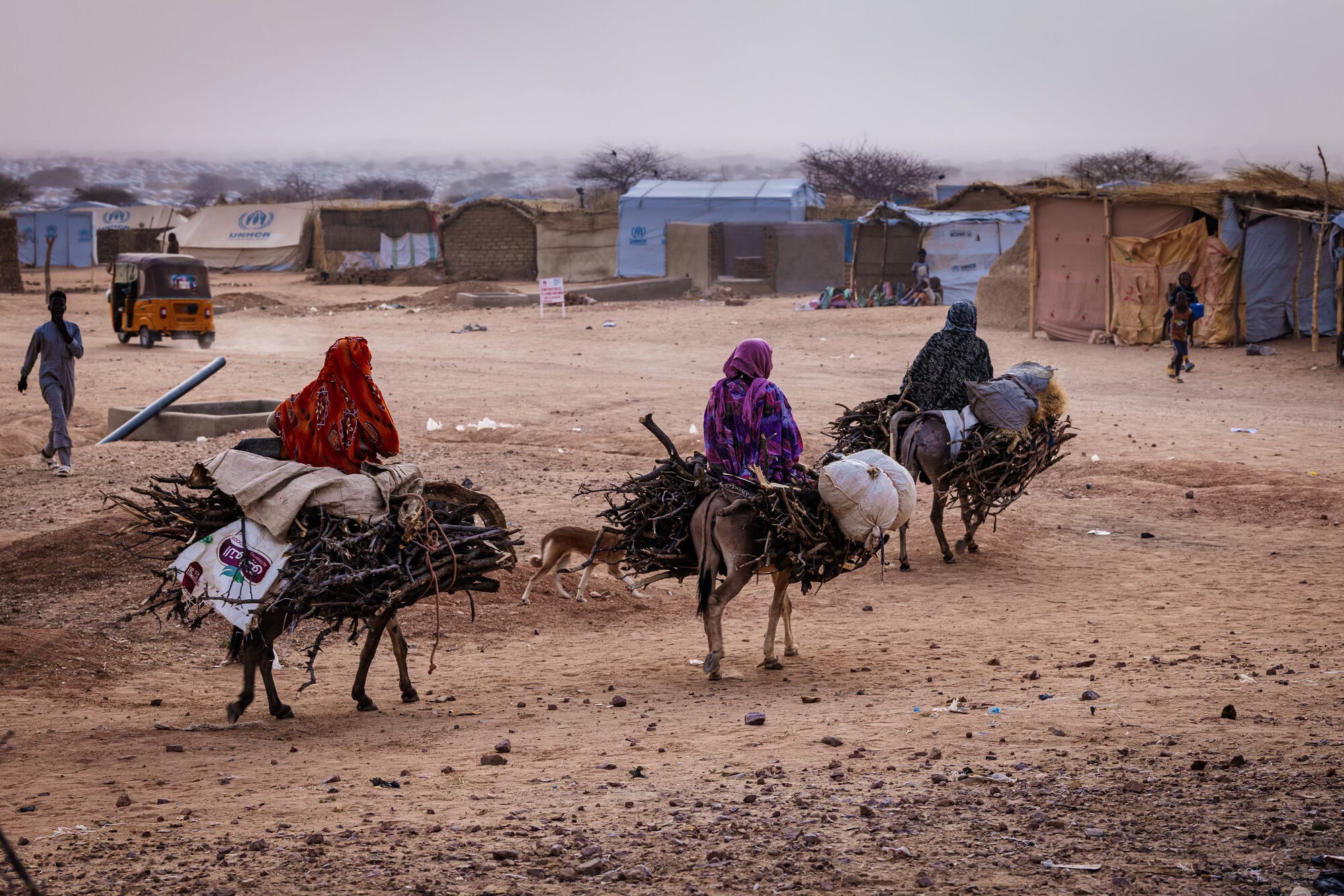
Sudan’s eastern regions were spared fighting so far, but the country’s capital and other major populations centers in the Nile Valley suffered nearly two years of urban combat. Although these cities are slowly recovering, the economy remains depressed and there are limited job opportunities apart from military service. Many civilians, even in ‘safe’ areas of the country where food is readily available in markets, are still living in poverty and on the edge of hunger. Further humanitarian funding cuts or a spike in food prices could worsen Sudan’s hunger crisis beyond current projections.
Even before the Strait of Hormuz closure, prices of seeds, fertilizer and fuel had more than doubled in local markets.
Famine Early Warning Systems Network, a U.S.-based monitoring group, warned last month that “the conflict in the Middle East is destabilizing the humanitarian supply pipeline and disrupting fertilizer access” in Sudan.
“Fertilizer imports are already depressed due to the Sudan conflict; however, further reductions in availability are expected to reduce yields, particularly for farmers preparing to plant in the semi-mechanized and irrigated eastern areas. The conflict is causing delays in humanitarian supply and increasing operational costs. Sustained conflict in the Middle East is expected to sharply worsen Sudan’s already fragile food security by further increasing fuel and import costs, disrupting logistics, and diverting international attention from Sudan’s conflict.”
This dynamic means that, even if Sudan escapes famine in 2026, it may suffer declining agricultural output that would affect food security in 2027 and beyond. A global recession that impacts Sudan’s exports, such as livestock, gum arabic, gold, and crude oil, would also impact livelihoods and push more Sudanese into poverty and, potentially, malnutrition.
International Rescue Committee issued a similar warning yesterday about the war in the Persian Gulf, writing:
“Disruptions to maritime and air transport are already delaying humanitarian supplies, increasing costs and forcing aid organizations to reroute or pause deliveries. As an example, the IRC currently has approximately $130,000 worth of essential pharmaceutical supplies stranded in Dubai, originally intended for the humanitarian response in Sudan. Prolonged disruption could severely limit the delivery of life-saving aid, deepen shortages of critical medicines and further delay assistance to millions in urgent need.”
Compared to pre-war figures, maternal mortality and infant mortality have risen sharply, according to Ministry of Health data. Factors include malnutrition, disrupted access to emergency obstetric care, shortage of skilled birth attendants, and the widespread collapse of health services.
“There’s a severe shortage of surgical and normal delivery equipment, as well as essentials such as antibiotics, surgical sutures and gloves,” said Dr. Hasan Babikir, a physician at the maternity hospital in El Obeid, as quoted by UN News. He described one delivery of premature triplets: “We had to watch two of the babies die before our eyes.”
Latrines, fresh water, and educational materials are also in short supply in some areas, according to Norwegian Refugee Council. “The crisis is disproportionately affecting women and children. In Sudan, Chad and South Sudan, 20 percent of women have no access to a toilet or latrine; that is three times more than men. Women and girls often travel long distances to fetch water, facing harassment and violence along the way.”
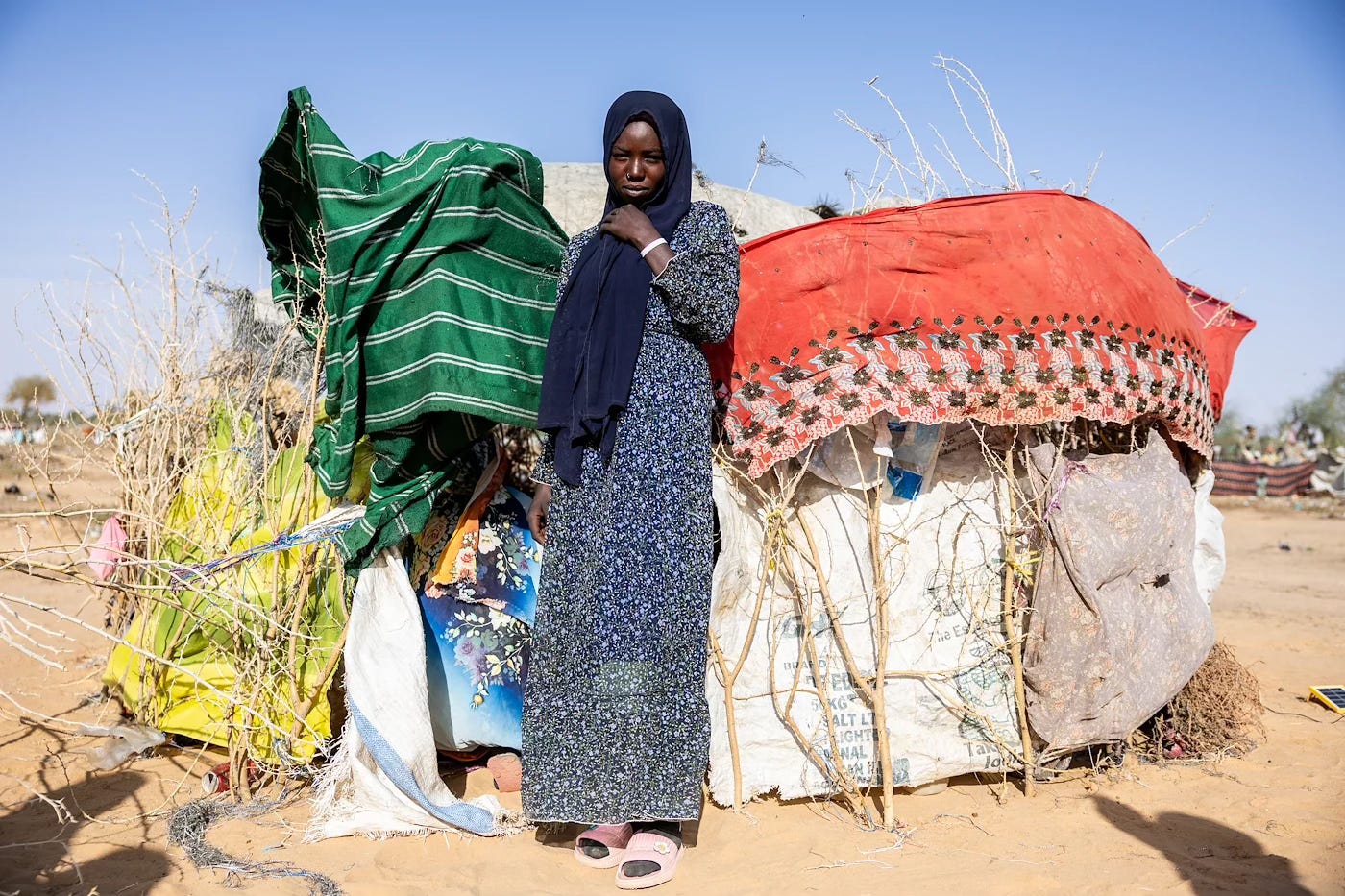
Sudan’s military leaders call the ongoing conflict “the Battle of Dignity,” portraying it as a glorious struggle for God and country. But refugees themselves report feeling a total loss of dignity since the war began: A survey conducted by Norwegian Refugee Council found, “Only a fraction of displaced families feels their current living conditions allow them to live with dignity: as low as 15% in Sudan, rising to 25% in Chad and 43% in South Sudan.”
“We are living a very hard life – no food, no education, no shelter,” said a displaced woman in Sudan. “Everything is difficult, and our children are losing hope for the future.”